Plan your visit
Getting around Priorat
Priorat’s wine villages are spread across steep hills, linked by short but winding roads. Here is how to get between them, and back from dinner, with or without a car.
- Best option
- A car, or a booked taxi
- Local taxis
- Falset, Marçà, La Bisbal de Falset, Cornudella
- Nearest airport
- Reus, few winter flights
- Tourist office
- Falset
The short answer
Do you need a car?
Mostly, yes. Public transport links the villages to Falset, the county town, but local buses are few, and some follow the school calendar rather than visitors’ hours. A car gives you freedom; a pre-booked taxi covers the evenings and any day when everyone wants to taste. If you arrive without a car, base yourself in Falset, which has the most restaurants, shops and taxis, and the bus to Reus.
Taxis
Local taxis: book ahead
Don’t count on ride-hailing apps, and taxis do not cruise the villages, so book by phone, ideally a day ahead and earlier for weekend evenings. According to the Priorat tourist board, local taxis are based in Falset, Marçà, La Bisbal de Falset and Cornudella de Montsant, and the other villages have none. Several have seven or eight seats, and taxis in Falset and Cornudella can carry wheelchair users. The tourist board keeps the current list of drivers and phone numbers.
Book the return at the same time as the outward trip: getting home from a winery or a village restaurant at 23:00 is the journey that catches visitors out. From Reus airport there is a taxi rank at arrivals; Aena, the airport operator, publishes approximate fares.
Buses
Village buses
Local buses run by Autocars Domènech connect Falset with Gratallops, Torroja, Porrera, Cornudella, Ulldemolins, the Montsant villages and the Marçà-Falset station. Some lines follow the school calendar, and on some routes outside term time the bus runs only on certain days and must be requested by phone the afternoon before. Check the timetables on the tourist board’s transport page before you rely on them, and do not plan an evening around a bus.
From the coast, La Hispano Igualadina runs between Tarragona and Falset (its timetables are on the Monbus website), and Plana runs from Barcelona and from Reus to Cornudella and La Granadella, with timetables that change by season. From Reus airport, the local bus takes you to Reus bus and train stations, where you change for Falset; see Aena’s bus page.
Trains
The R15 train
The Rodalies R15 line runs from Barcelona via Tarragona and Reus to Marçà-Falset and on towards Móra la Nova and Riba-roja. It is a lovely ride, but there are only a handful of trains a day and the line has had long engineering closures, so check Rodalies de Catalunya before you travel. Marçà-Falset station is about 2 km outside Falset: a local minibus connects it with Falset, or book a taxi to meet the train. See Barcelona to Priorat for the journey from the city.
Car hire
Hiring a car
Pick up a car on the way in. At Reus airport, the closest, Sixt and Goldcar have desks, but the airport is seasonal, with very few passenger flights in January and February according to Aena, so check flights and the hire desk before you book. At Camp de Tarragona high-speed station, Enterprise has an office open on weekdays and Saturday mornings, closed on Sundays; see Enterprise Camp de Tarragona. Barcelona airport and the city have the widest choice.
A small car is easier on village streets and in tight cellar car parks.
On the road
Driving and parking
Roads in Priorat are good but narrow and winding, with steep drops and few places to overtake: allow longer than a map suggests, and avoid driving the hill roads for the first time after dark. The road from Cornudella up to Siurana is a single climb to a small village with limited parking, which fills on fine weekends and holidays, so arrive early. In the villages, park on the edge and walk in; old centres are not built for cars.
Spain’s drink-driving limits are low and strictly enforced, with a lower limit for new and professional drivers. At tastings, the driver can spit or simply enjoy the visit; or book a taxi and everyone can taste.
Electric cars and motorhomes
Charging and camper stops
The tourist board lists public charging points in Falset (Euterpe car park), at Escaladei, El Masroig, Margalef and Ulldemolins. There are fewer than in a city, so charge where you sleep if your accommodation offers it. For campervans, see the tourist board’s list of motorhome areas.
Help on the ground
Tourist information
The Priorat county tourist office is in Falset, at the Espai Vi i Paisatge on Carrer Miquel Barceló, and can help with taxis, buses and maps (email oit@priorat.cat). There are also offices in Cornudella de Montsant and Ulldemolins, and the Montsant Natural Park information centre is in La Morera de Montsant.
| Getting around by | Good for | Watch out for |
|---|---|---|
| Car | Freedom, several villages a day | Narrow roads; one driver stays sober |
| Local taxi | Evenings, tasting days | Few cars; book ahead, including the return |
| Village bus | Falset and a few villages | School-day timetables, some on request |
| R15 train | Arriving from Barcelona, Tarragona or Reus | Few trains; station outside Falset |
Questions
Before you go
Is there Uber in Priorat?
Don’t count on it. Plan on a local taxi instead: book by phone, ideally a day ahead and including your return journey.
Can I visit Priorat without a car?
Yes, if you plan. Stay in Falset, use local taxis for wineries and dinners, and check bus timetables with the tourist office. A private wine tour is another way to visit cellars without driving.
Where can I hire a car near Priorat?
At Reus airport (few flights in winter), at Camp de Tarragona high-speed station, or in Barcelona.
How long does it take to drive between villages?
Distances are short, but the roads are narrow and winding, with few places to overtake, so allow longer than a map suggests.
Keep planning
More of our guides
See where to stay, where to eat, things to do beyond wine, the best time to visit and our village guides. Spotted something out of date? Tell us at jon@prioratwine.es.
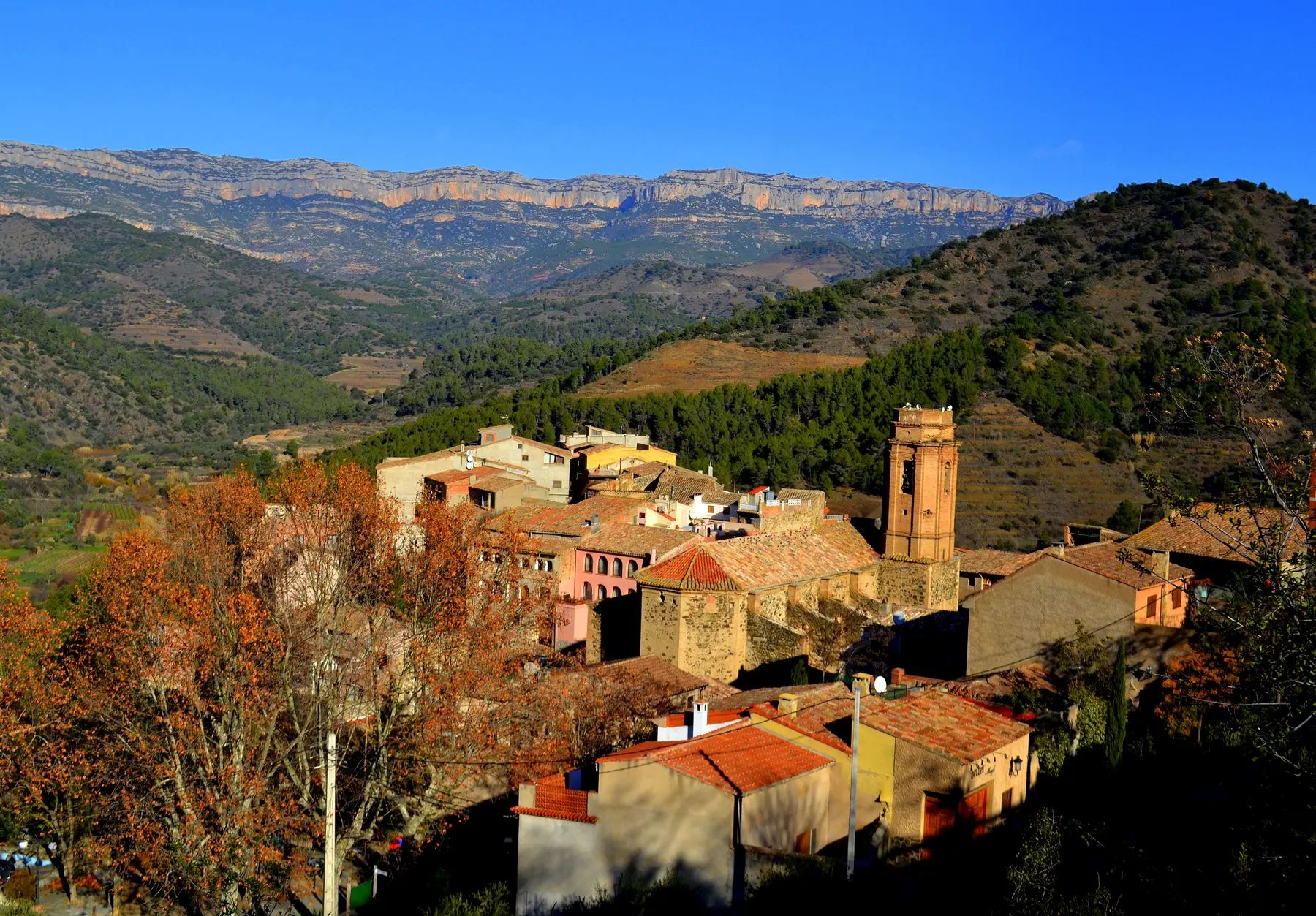
Photography: Siurana valley, Àngela Llop, CC BY-SA 2.0. Image cropped.
