DOQ Priorat · Montsant river
La Vilella Baixa
Tall houses rise from the meeting of two rivers, while four current producer identities and a 1919 cooperative inheritance occupy the streets above.

La Vilella Baixa covers 5.62 square kilometres. The village stands at 218 metres and had 202 residents in the 2025 register.
Orientation
Where the Escaladei stream meets the Montsant
The local view places La Vilella Baixa below La Vilella Alta, with Cabacés to the west and Gratallops and Torroja del Priorat to the east. The locator marks the municipality within the Priorat comarca.
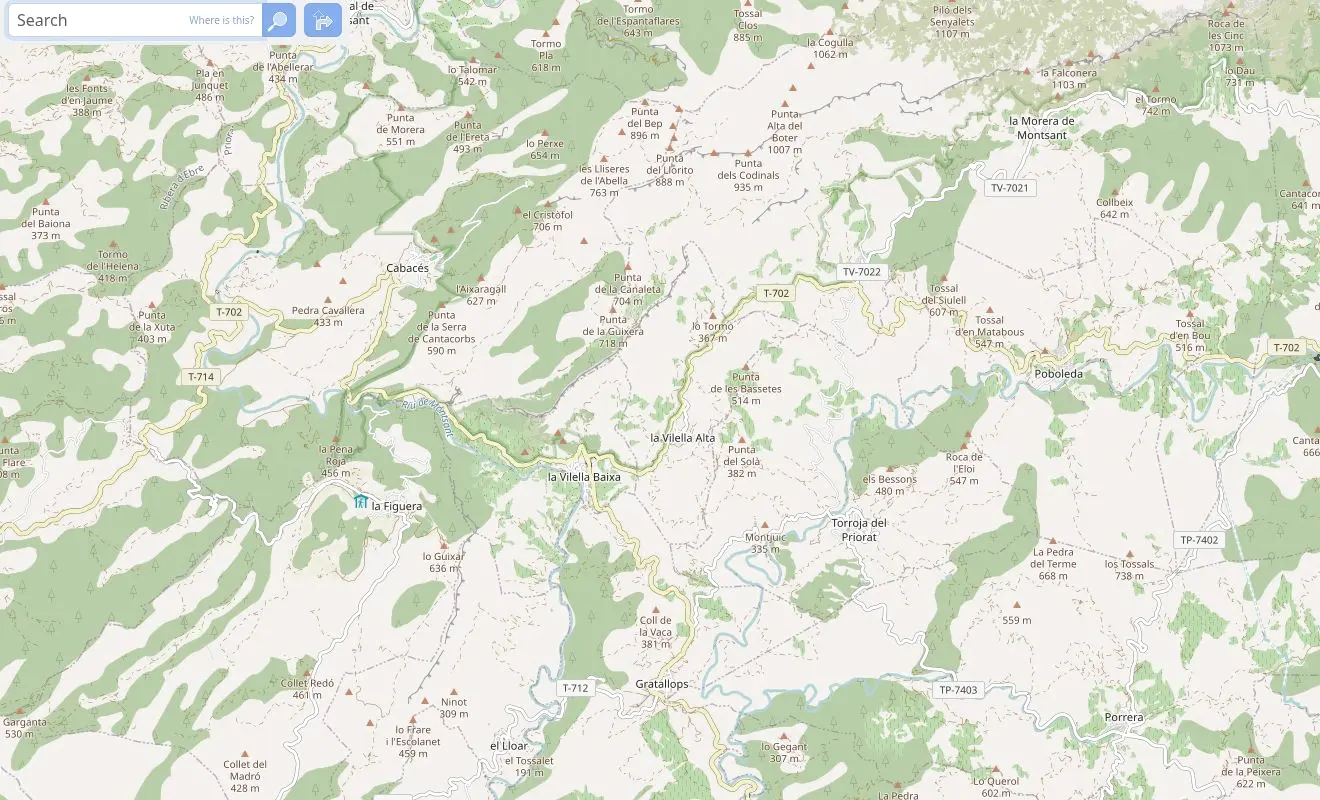 La Vilella Baixa© OpenStreetMap contributors
Wine village
Four verified producers after the records are reconciled
The live DOQ Priorat village list supplies three current local identities. Production records and current wine evidence add Celler Marc Aguiló. Celler Bujorn remains in the research record while current producer activity is reconfirmed. A fourth appellation-list name belongs canonically to La Vilella Alta.
Producer register
Four current profiles
This is a municipal relationship list, not a list of tasting rooms. Visits and direct sales must be confirmed with each producer.
The New York of Priorat
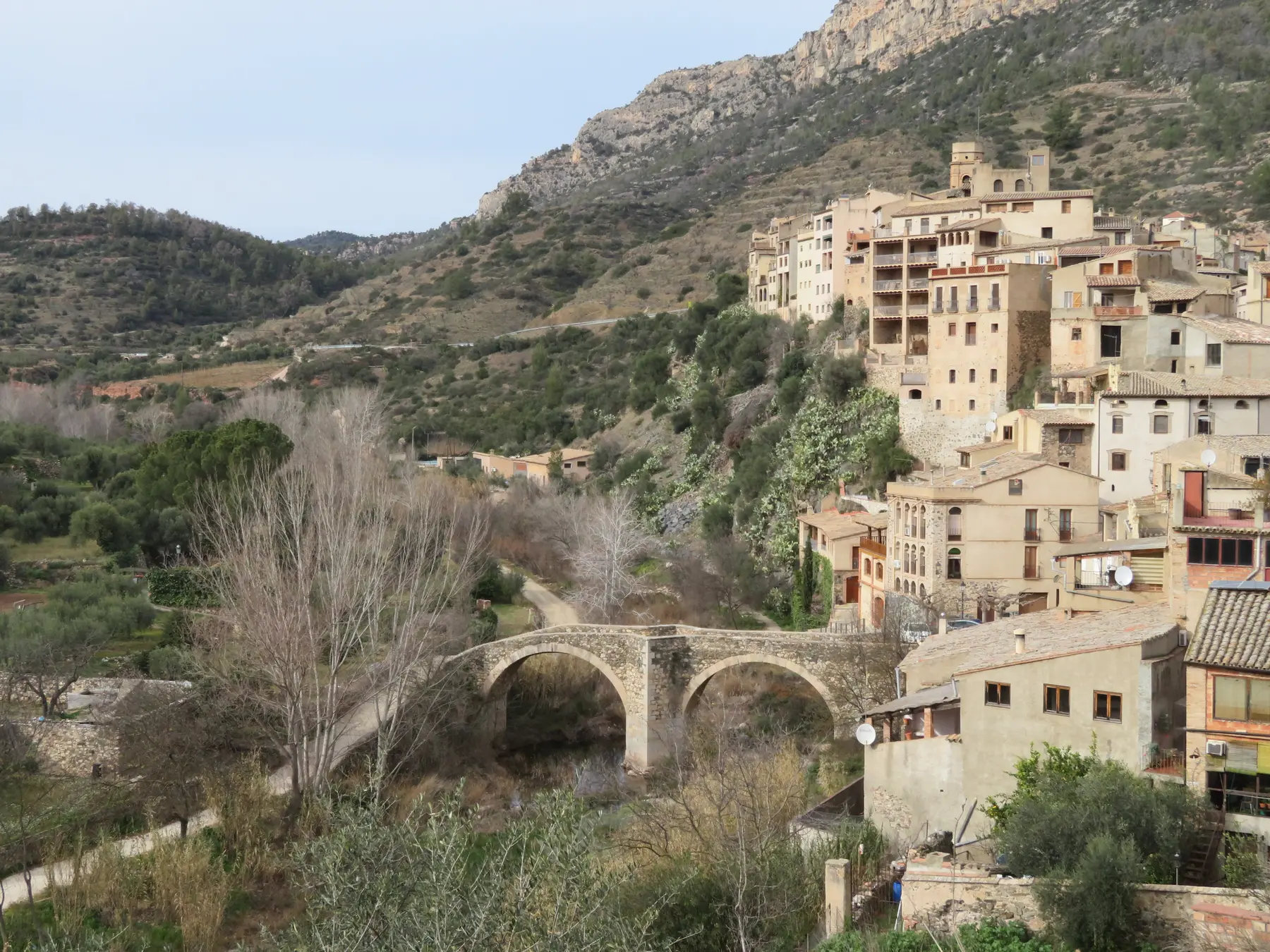
Houses built vertically into the slope
La Vilella Baixa is often called the New York of Priorat because of the height of the houses above the river. The comparison describes their unusual vertical form rather than the size of the settlement.
A building set into the hillside can open onto one street at an upper floor while presenting seven or eight storeys towards the lower ground. The result is most legible from the river approaches.
The village carries the name into the Fira i Tast a la Nova York del Priorat, a wine fair and tasting held in August. Dates and participating producers change, so the current programme should be checked before travel.
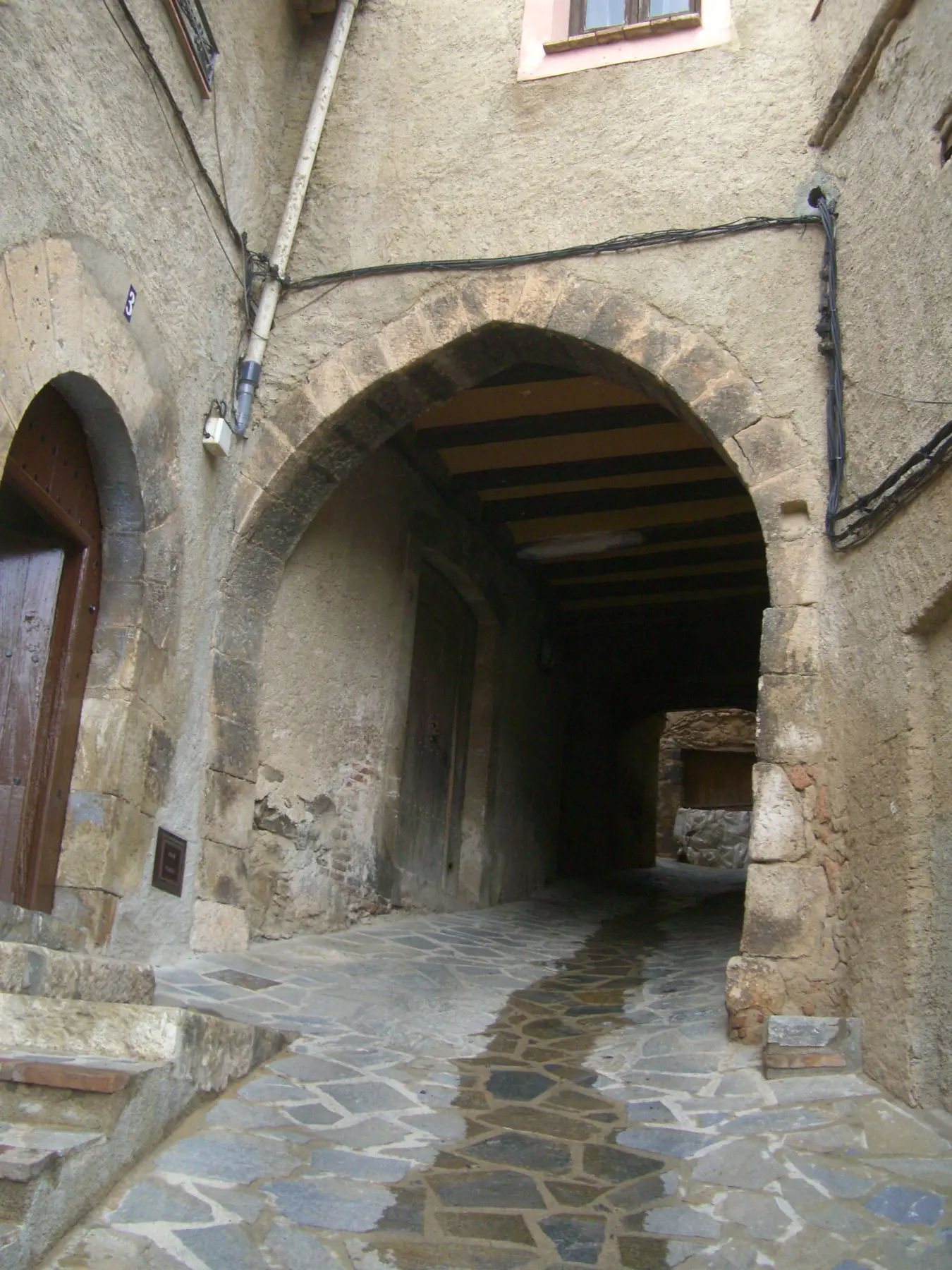
The old centre
Carrer que No Passa and Sant Joan Baptista
Carrer que No Passa retains an old entrance portal and ends within the compact settlement instead of continuing to another road. Its enclosure makes it one of the clearest surviving parts of the old village plan.
The parish church of Sant Joan Baptista dates from the second half of the eighteenth century. Public heritage descriptions identify a three-part interior and a bell tower incorporated into the building.
Bridge and rivers
Three stone arches below the village
Pont de Pedra crosses the Montsant river on three stone arches. Public sources vary in how confidently they describe its age or architectural period, so no precise construction date is claimed here.
The riuet d'Escaladei joins the Montsant beside the settlement. This meeting of waters gives La Vilella Baixa a lower, steeper physical setting than the ridge and hilltop villages nearby.
Roads and paths lead towards La Vilella Alta, Cabacés, Escaladei and Gratallops. Routes should be checked against current conditions rather than inferred from proximity alone.
The cooperative
A 1919 building within one four-village producer
La Vilella Baixa's agricultural syndicate was founded in 1919. The village cooperative joined the structure now known as Vinícola del Priorat in 1991 with Gratallops, El Lloar and La Vilella Alta.
The former syndicate building retains current wine relationships, including Celler Lo's local story and a Vinícola del Priorat visitor experience. Those uses belong to separate public subjects even when the building history overlaps.
Vinícola del Priorat remains one producer across four municipalities. Its local facility and succession are real La Vilella Baixa facts, but they do not enlarge the five-name independent producer register.
Planning a visit
No railway station and limited buses
La Vilella Baixa has no passenger railway station. The regional F1 service links the village with Falset, La Vilella Alta, Cabacés, Margalef and La Bisbal de Falset, but some journeys operate on demand.
Transport arrangements were checked against current public information in August 2026. Recheck the timetable and any previous-working-day booking requirement before travelling. A car remains practical for combining cellar appointments.
Continue nearby
Photography: village view, joan ggk, licensed under CC BY 2.0; Carrer que No Passa, Arnaucc, licensed under CC BY-SA 3.0 ES; stone bridge, Juan Emilio Prades Bel, licensed under CC BY 4.0. Images cropped.


