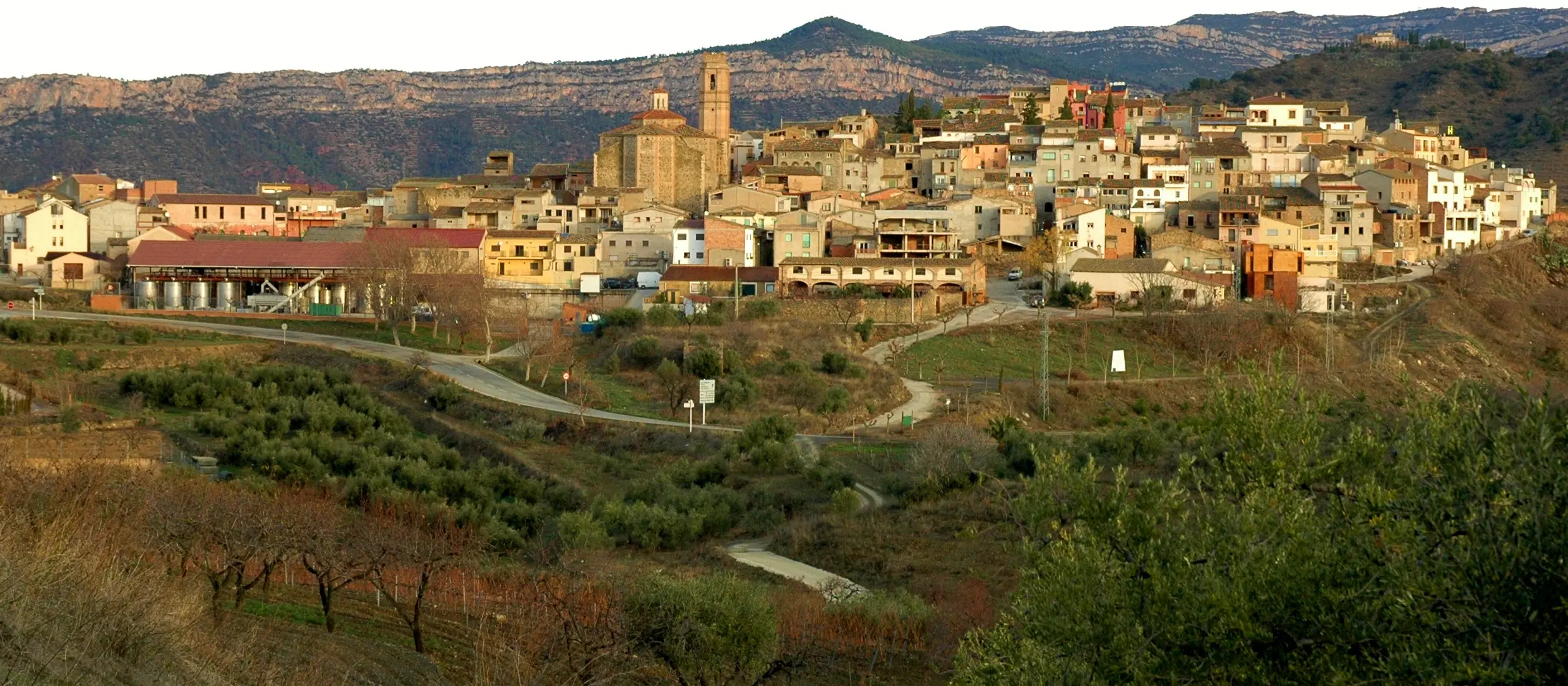
DOQ Priorat · central wine country
Gratallops
Gratallops is a small village with an unusually large number of cellars. The streets occupy the top of a ridge, with vineyards dropping away on every side.
Gratallops stands in the centre of DOQ Priorat. El Lloar faces it across the western valley. La Vilella Alta and La Vilella Baixa are to the north-west, with Torroja and Porrera to the east. You can walk across the village in a few minutes, though the vineyards extend far beyond the streets.
The producers range from family cellars and small independent projects to internationally known estates. Vinícola del Priorat represents an older cooperative history. Some wineries are in the village, while others work with vineyards and facilities spread across several municipalities.
Orientation
Gratallops and the roads around it
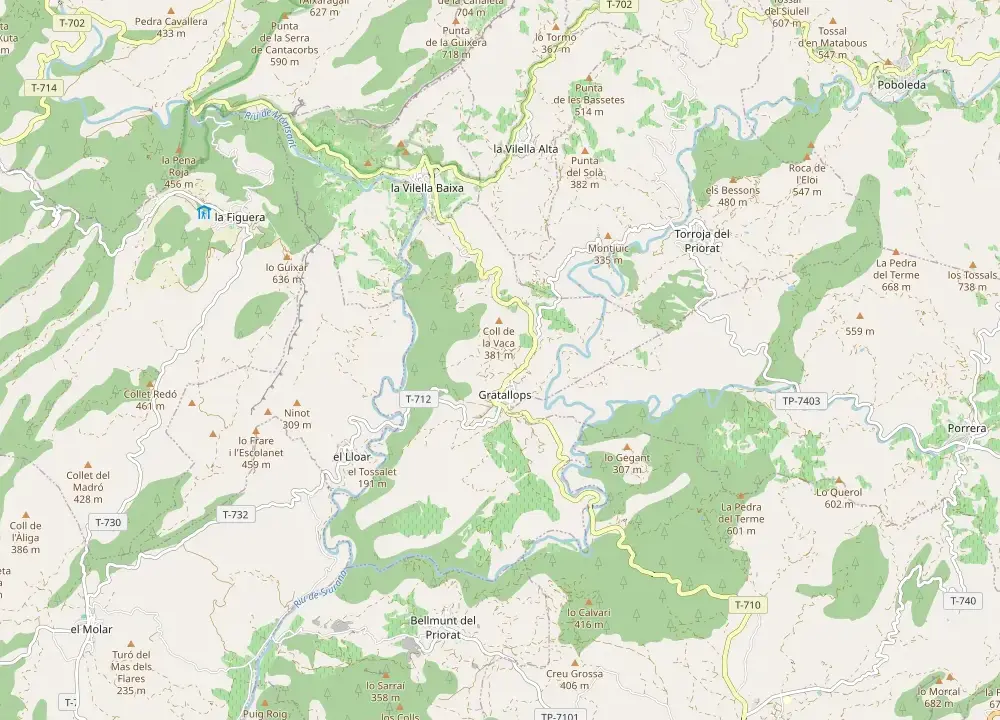 GratallopsConsolació© OpenStreetMap contributors
Within the Priorat comarca
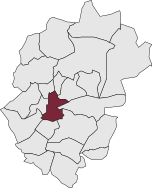
Gratallops is highlighted. These are municipal boundaries within the Priorat comarca, not the limits of DOQ Priorat.
The local map shows the village streets, the T-710 and the road towards Consolació. The inset shows where Gratallops sits within the comarca.
Winery addresses need care. The registered address, the vineyards and the meeting point for a visit may all be in different places.
Consolació
Above the village at Consolació
The hermitage stands beyond the village on a hill of llicorella near the boundary between Gratallops and La Vilella Alta. From the surrounding ground there are views towards the Serra de Montsant and across the old-vine costers below.
The hill is surrounded by vineyard parcels at different heights and exposures. The grapes for L’Ermita come from costers below Consolació.
The building has a Romanesque core and a later history of damage and reconstruction. It is normally closed to the public, apart from limited local occasions. Visitors should not expect to enter the building.
Vineyards and wine
Llicorella, costers and individual sites
Llicorella is the fractured dark slate associated with Priorat. Costers are the steep slopes on which many older vineyards survive. Both are common around Gratallops, though conditions vary between parcels.
Aspect, elevation, exposure and the condition of individual ground matter. Garnatxa and Carinyena recur throughout the producer list. International varieties also appear in some estates. The differences between sites cannot be explained by slate alone.
Wine history
Before and after the 1980s
Modern accounts often begin with the group of producers who changed Priorat’s international reputation during the late twentieth century. Clos de l’Obac was founded in 1987 and Álvaro Palacios arrived in 1989. Clos Mogador and Clos i Terrasses belong to the same wider period of renewal, though their histories and vineyards are not identical.
These producers returned attention to old slopes and individual vineyard sites. They worked near one another, but their estates developed separately.
Vinícola del Priorat traces the Gratallops cooperative to 1917. The present cooperative also works beyond Gratallops.
The cooperative and the later private estates now form different parts of the same village wine economy.
Wineries
Producers based in Gratallops
A village address can refer to a public cellar, an estate office or a production base. The relationship is different for each producer.
Full Gratallops producer list
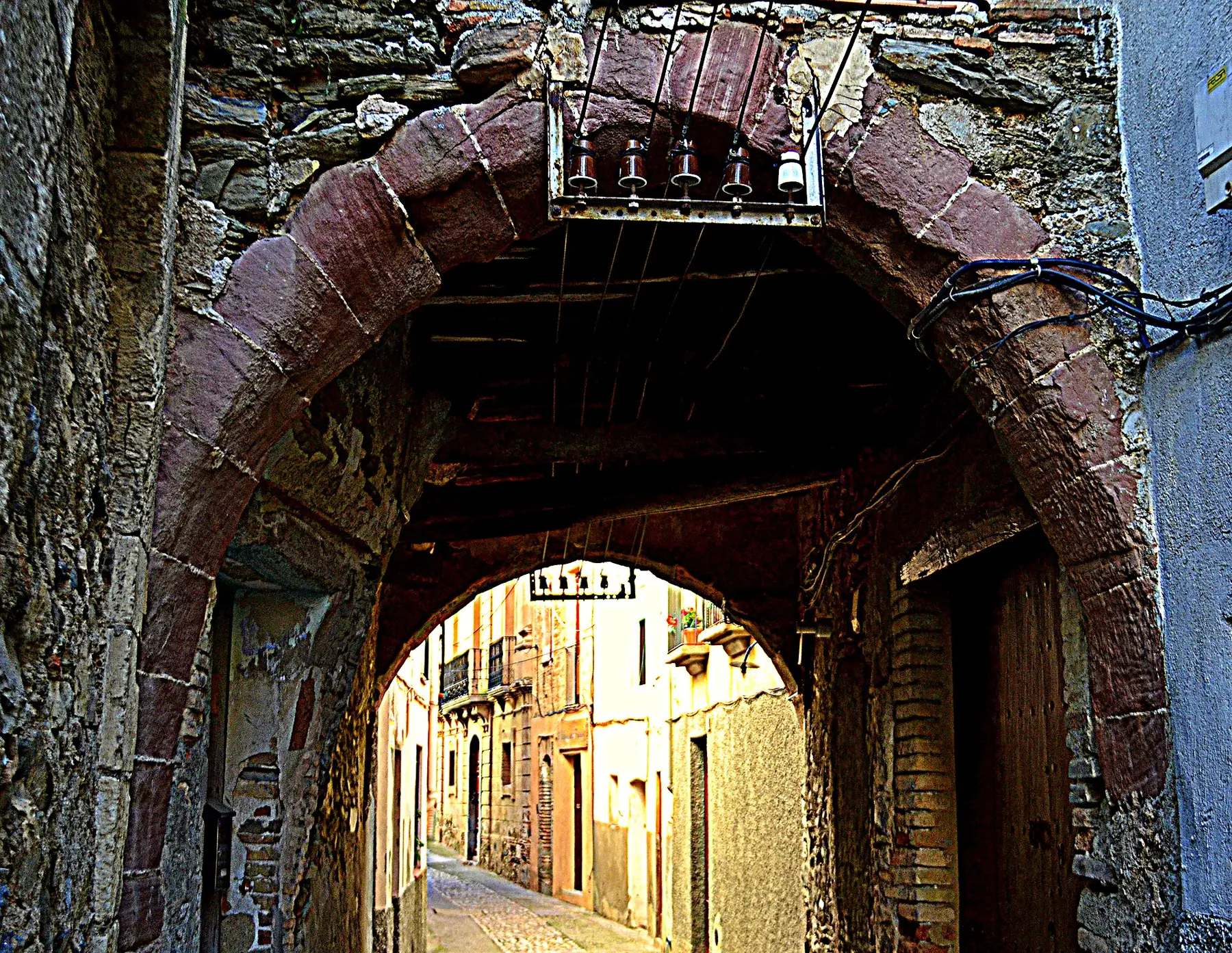
Inside the village
Cellars on ordinary streets
Sant Llorenç anchors the centre with its eighteenth-century neoclassical form, three naves, dome and bell tower. Carrer Major retains Casa dels Frares, its Renaissance doorway and a red-sandstone arch thought to mark an old entrance into the settlement.
The village fabric and wine economy overlap. A working cellar may sit behind a doorway that looks much like the house next to it. Most still require an appointment.

Planning cellar visits
Arrange the appointment before the route
Advance booking is the realistic default. Clos Mogador, Clos Figueras and Clos de l’Obac take visits by appointment. Buil & Giné receives visitors while Álvaro Palacios restricts visits to wine professionals.
- Confirm the current visitor policy and meeting point.
- Ask about language, price and the format of the visit.
- Check whether the appointment is in the village or at another facility.
- Allow time for narrow roads and slower journeys between estates.
Photography: Carrer Major and Sant Llorenç, Angela Llop, CC BY-SA 2.0; Gratallops panorama, Josep Renalias, CC BY-SA 3.0; vineyards near Gratallops, Angela Llop, CC BY-SA 2.0. Images cropped. Map data: OpenStreetMap contributors, ODbL.
_-_1.jpg)
_-_1.jpg)

