Southern Priorat · DO Montsant
Capçanes
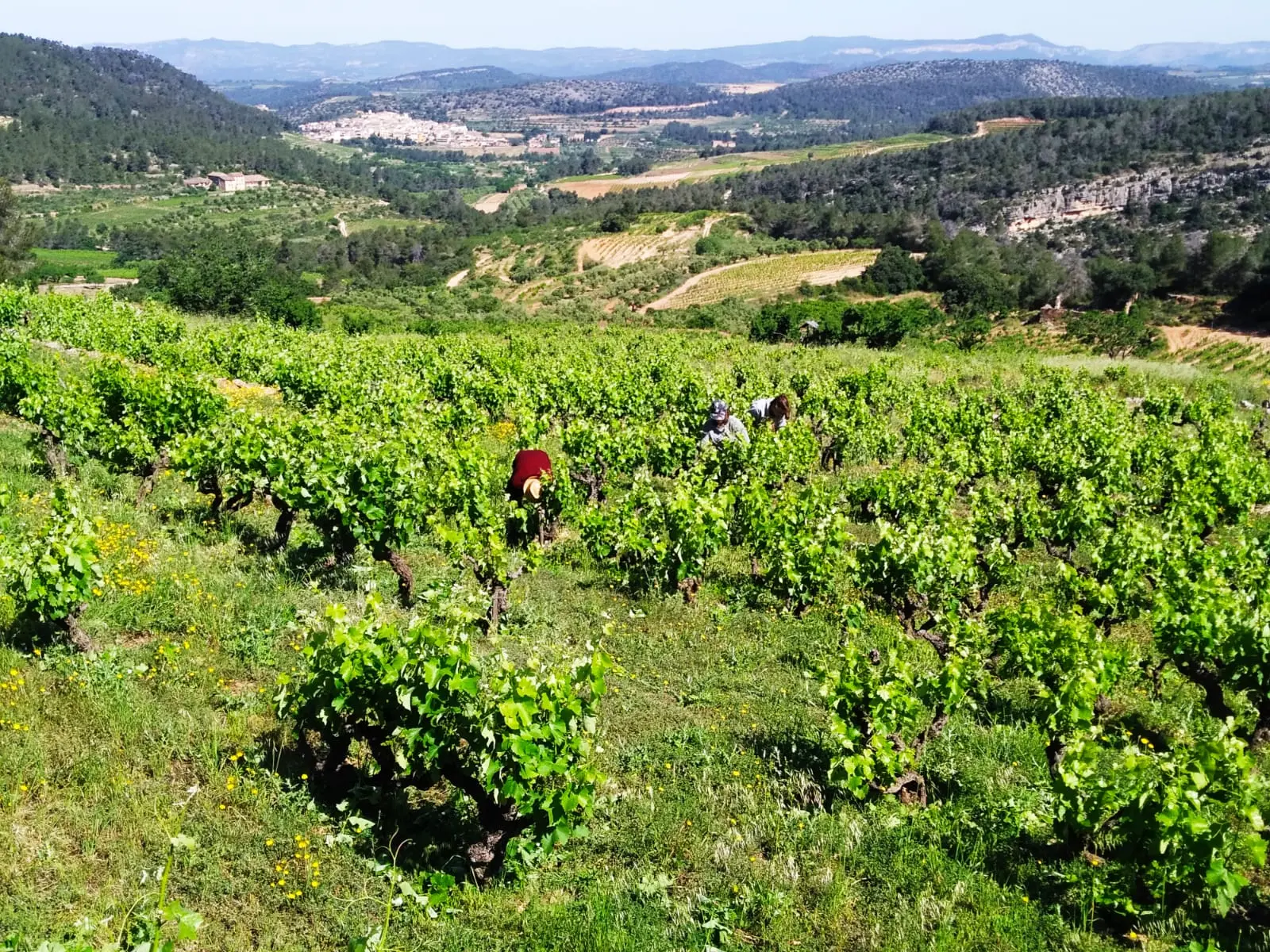
A wine village where a cooperative, four contrasting vineyard soils and the Serra de Llaberia belong to the same landscape.
Capçanes sits in a valley at the southern edge of the Priorat comarca. Marçà is to the north and Els Guiamets to the west. Beyond the cultivated ground, the wooded slopes rise towards the Serra de Llaberia.
Vines dominate the farmland around the village, but the local story is broader. A railway stop, dry-stone structures and prehistoric rock art all connect Capçanes with routes through the surrounding country.
Orientation
Village, railway and the road south
 Capçanes© OpenStreetMap contributors
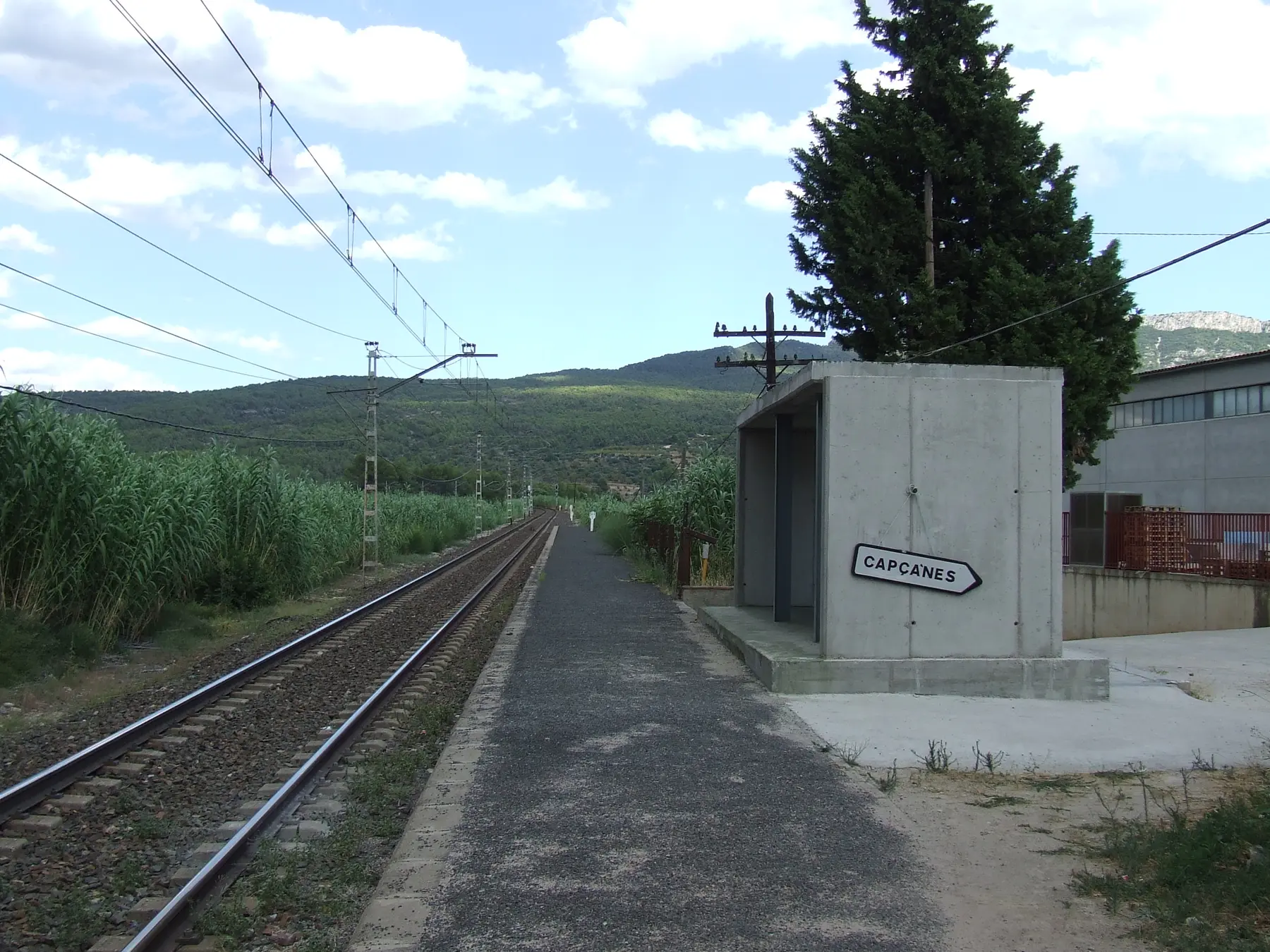
The railway passes north of the centre and continues towards Marçà and Els Guiamets. The station is close enough to reach on foot, though stopping patterns must be checked before travelling.
The municipality also borders Tivissa in Ribera d’Ebre and Colldejou in Baix Camp. The administrative boundary and the wine appellation do not follow the same outline.
Celler de Capçanes
A cooperative changes course
Founded in 1933, Celler de Capçanes began by supplying grapes and bulk wine. Bottling created a direct market for wines carrying the cooperative’s own name.
Peraj Ha’abib was first made from the 1995 vintage for Barcelona’s Jewish community. Its success helped the cooperative develop a wider bottled range. The kosher wines remain an important part of the business, but not its whole identity.
First vintage of Peraj Ha’abib
Vineyards
Four soils shown through one grape
La Nit de les Garnatxes is made as four separate expressions of Garnatxa. The series makes the variation around Capçanes tangible without pretending that one soil defines the whole municipality.
Sandy decomposed granite
Clay
Limestone
Slate
Wineries
Four village relationships
The winery, vineyard and public meeting point are not always at the same address.
Celler de Capçanes
The village cooperative, founded in 1933.
Celler Cal Castellnou
A small family cellar in the centre of Capçanes.
Josep Grau Viticultor
A DO Montsant facility at Paratge de les Taules.
Vinyes Domènech
A vineyard estate at Camí del Collet, towards the Serra de Llaberia.
Les Taules
Dry stone built for work
The Les Taules area east of the village contains walls, shelters, animal enclosures, water structures, beehive forms and a lime kiln. They are working remains of the agricultural landscape, not ornaments placed beside it.
The signed route preserves the local names of buildings and former owners. Josep Grau Viticultor also uses Paratge Les Taules as its Capçanes address. The shared place-name does not establish that the winery lies on the signed route.
Village history
From Tivissa territory to Capçanes
Iberian and Roman material has been found on the slopes north of the present village, while the municipal account places an Iberian settlement at Marmellar.
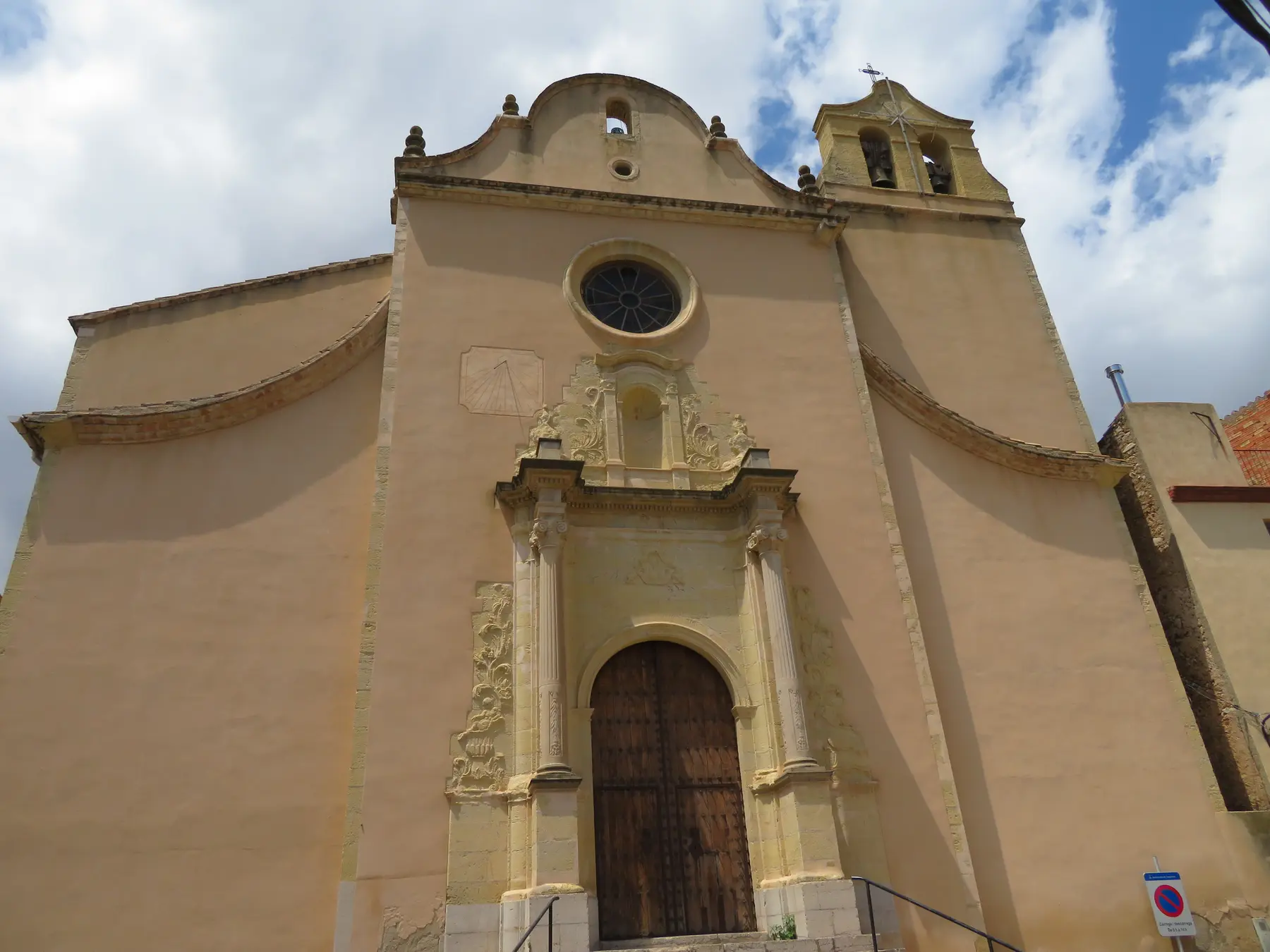
The church of the Nativity of Mary is recorded in the twelfth century, when Capçanes belonged to the wider parish and territory of Tivissa. The village expanded during the sixteenth century and became an independent municipality in 1843.
Pere Joan Barceló
Carrasclet and the Serra de Llaberia
Pere Joan Barceló i Anguera, known as Carrasclet, was born in Capçanes. A charcoal seller and soldier, he fought for the Habsburg cause during and after the War of the Spanish Succession and used the Serra de Llaberia as a refuge.
A monument by Francesc Carulla i Serra stands at the entrance to the village. The Ruta del Carrasclet carries the connection out towards the mountain landscape associated with his life.
Prehistoric Capçanes
Nineteen groups of rock art
More than 150 figures have been recorded in the Vall and Parellada ravines. They include the human scene at La Matança, engraved deer and the large bull at Parellada III.
The shelters form an exceptional local group, but they are not part of the UNESCO World Heritage property inscribed in 1998.
AccessThe rock-art sites remain temporarily closed. Do not approach the shelters independently. Check with the Ajuntament de Capçanes before planning a visit.
Arriving
A railway stop beside the village
Capçanes has its own stop on the R15 line, north of the centre. Services do not call with urban frequency, so check the current timetable in both directions.
A car is still useful for vineyard estates, Les Taules and routes towards the Serra de Llaberia.
Continue through Priorat
Two other ways into the region
Photography: vineyards above Capçanes, Anton Baiges Gras, CC BY 4.0; church of the Nativity, Juan Emilio Prades Bel, CC BY-SA 4.0; Capçanes station, Gustau Erill i Pinyot, CC BY-SA 3.0. Images cropped.
.jpg)
