DO Montsant · Baix Priorat
El
Masroig
Wine and olive oil share a red-soiled landscape above the final reach of the Siurana.
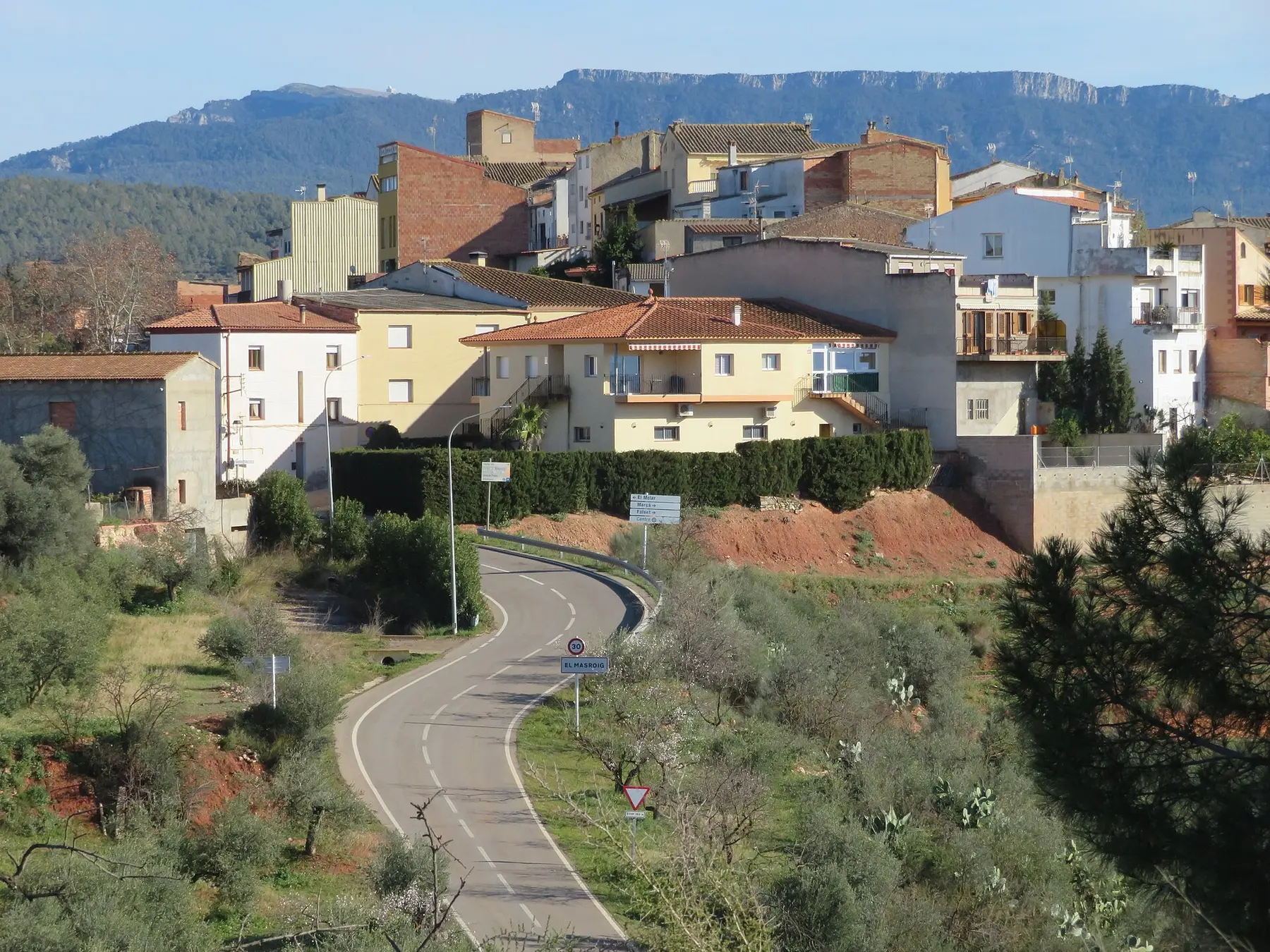
El Masroig runs along the crest of a 192-metre hill. Its narrow streets rise towards Sant Bartomeu while vineyards, olive groves and the lower Siurana country spread below.
The 15.51-square-kilometre municipality had 473 residents in the 2025 register. It belongs to DO Montsant and sits in the Baix Priorat, west of Falset and north of Els Guiamets.
The ground is not one uniform soil. Red clay and sandstone are prominent, with limestone, sedimentary material and pockets of llicorella appearing across different sites.
Cooperative since 1917
The cellar works with grapes and olives
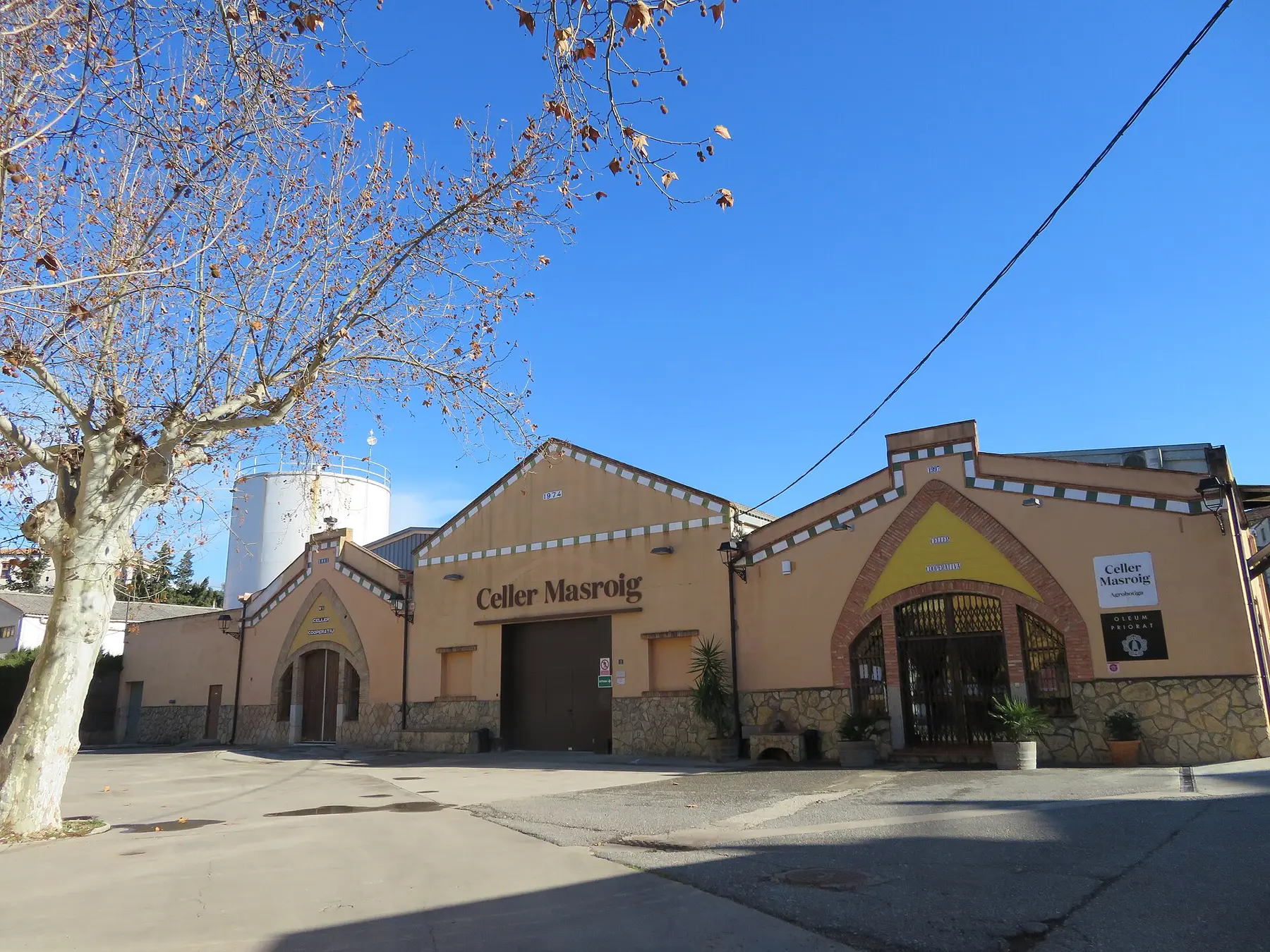
Celler Masroig grew from the village cooperative founded in 1917. Its members cultivate vines and olive trees, and the winery remains both a production site and the clearest public entry into the village’s agricultural economy.
The visit moves from the old underground vats to the later barrel hall, finishing with wine and extra virgin olive oil. Booking in advance remains the sensible default.
Producer register
Four current producer relationships
This is a municipal list, not a list of tasting rooms. Tourism sources currently identify Celler Masroig and Coca i Fitó as the two established visitor offers.
The Generalitat register also records Celler Vendrell Rived, Josep Grau Viticultor and Vins de Mas Sersal as external bottlers using an El Masroig installation. That is a bottling relationship, not evidence of three further wineries based in the municipality.
Ninth to seventh centuries BC
A settlement whose plan can still be read
Puig Roig del Roget occupies a sandstone and quartz-conglomerate hill above the Siurana. The 1,200-square-metre settlement belongs to the end of the Bronze Age and beginning of the Iron Age.
Excavation began in 1977 under Margarida Genera. Walls and building plans survive with unusual completeness, making this more than a viewpoint with an archaeological label attached.
Les Pinyeres
The church remains. The village does not.
The hermitage preserves the church of the vanished settlement of Les Pinyeres. Its Romanesque origin survives within a building reconstructed and enlarged in later centuries.
Inside the village
Sant Bartomeu was built for a larger town
Work on the present parish church began in 1829 and continued through much of the nineteenth century. Its scale dominates a centre otherwise made up of steep, narrow streets and modest houses.
Beyond the centre, restored paths connect El Masroig with El Molar, Bellmunt del Priorat and Falset. The Camí Ral dry-stone route makes agricultural construction part of the walk rather than a separate heritage stop.
Visiting
Two appointments, several outward paths
Celler Masroig and Coca i Fitó receive visitors by prior arrangement. Confirm the current time, language and meeting point directly before travelling.
El Masroig has no passenger railway station. Approach by road from Falset, El Molar, Bellmunt del Priorat or Els Guiamets, and allow separate time for Puig Roig and Les Pinyeres outside the centre.
Continue nearby
Photography: village panorama and Celler Masroig, Juan Emilio Prades Bel, CC BY 4.0. Images cropped.
.jpg)
.jpg)