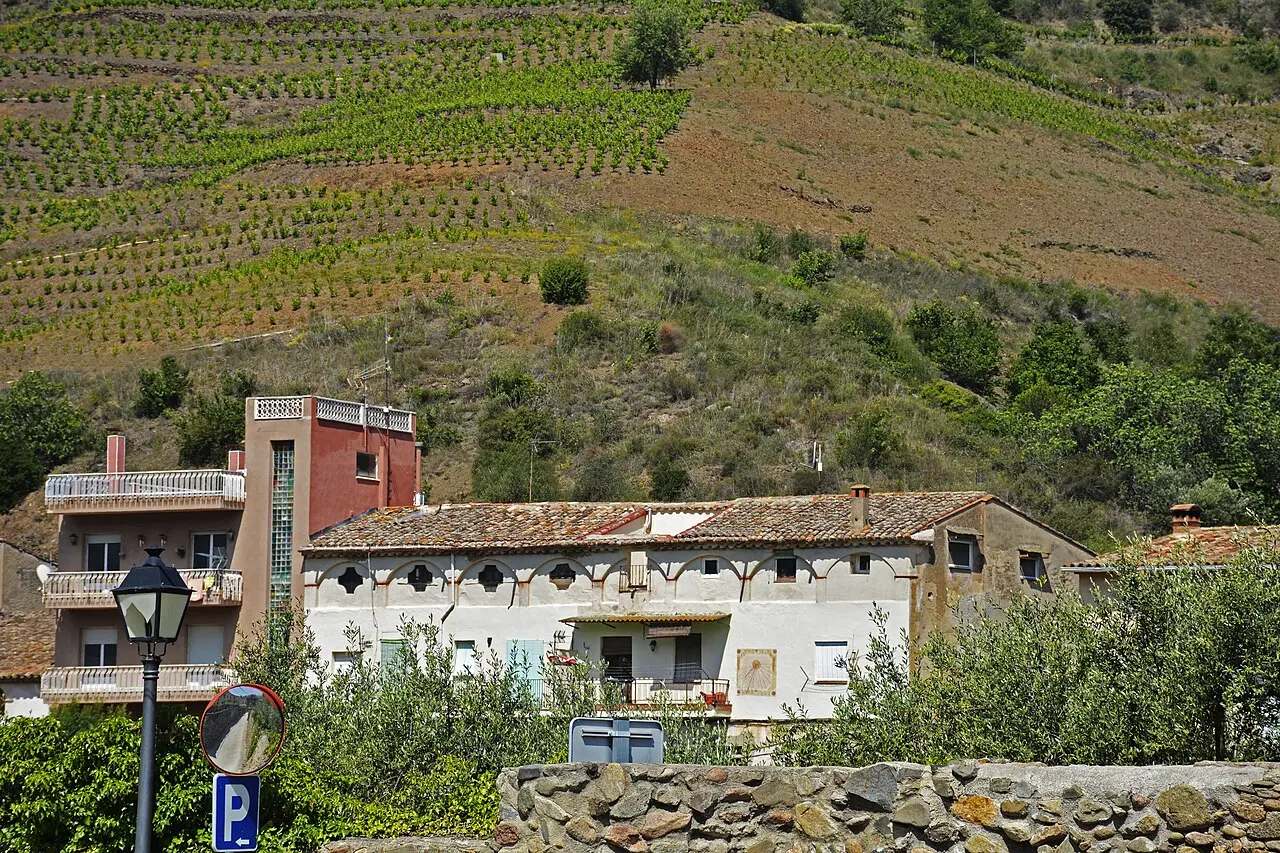
A leading red grape in both appellations
DOQ Priorat recommends red Garnatxa alongside Carinyena. DO Montsant also treats Garnatxa Negra as one of its historic and predominant varieties.
Warm sites can bring ripeness, but altitude, exposure, vine age, yield, harvest date and winemaking all affect the resulting wine. The grape name alone does not establish flavour or quality.
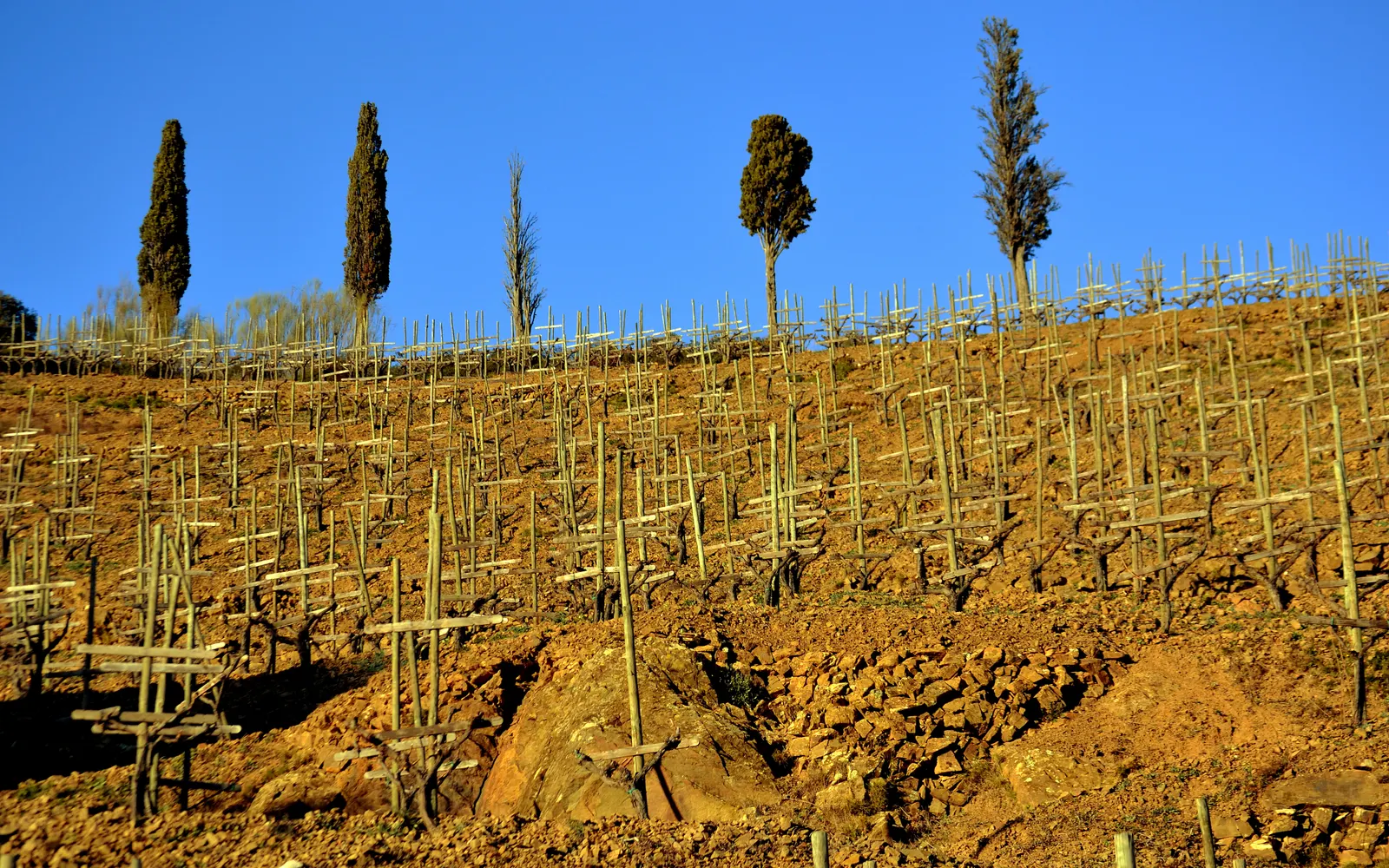
Garnatxa Blanca belongs to the same regional story
White Garnatxa is authorised in both appellations and is one of DO Montsant's principal traditional white varieties. It appears as a varietal wine and in blends, often beside Macabeu.
Named examples change with vintage and release. The durable distinction is between the authorised grape, the place it was grown and the choices made for that particular wine.

Site changes the pace of ripening
Garnatxa grown on exposed lower ground does not meet the same conditions as vines in the high country beneath Montsant. Orientation, wind and access to water can alter the season within a short distance.
This is why broad tasting shorthand should be treated cautiously. The useful question is not only which Garnatxa, but where it grew and how that site behaved in the stated vintage.
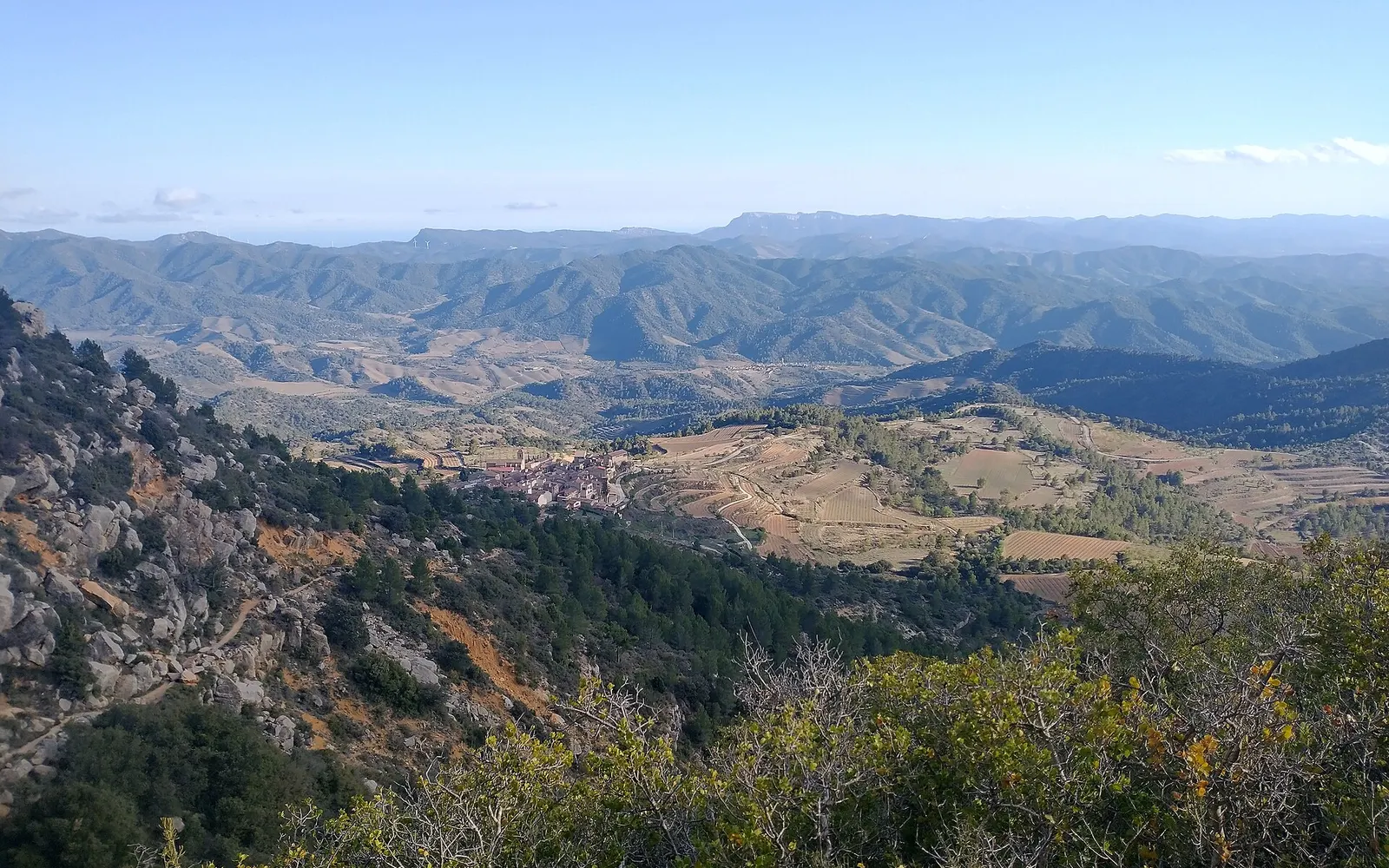
Blends are part of the tradition
Garnatxa often appears with Carinyena, yet the proportion and purpose of that partnership vary. One may provide the greater share while the other changes structure, freshness or the way a wine develops.
A varietal name on a technical sheet is evidence about composition, not a complete explanation of character. Fermentation, extraction, vessel and release date remain producer choices.