DOQ Priorat · Siurana valley
Torroja del Priorat
A ridge village where the appellation council, small cellars and a Cavaillé organ occupy the same compact centre.
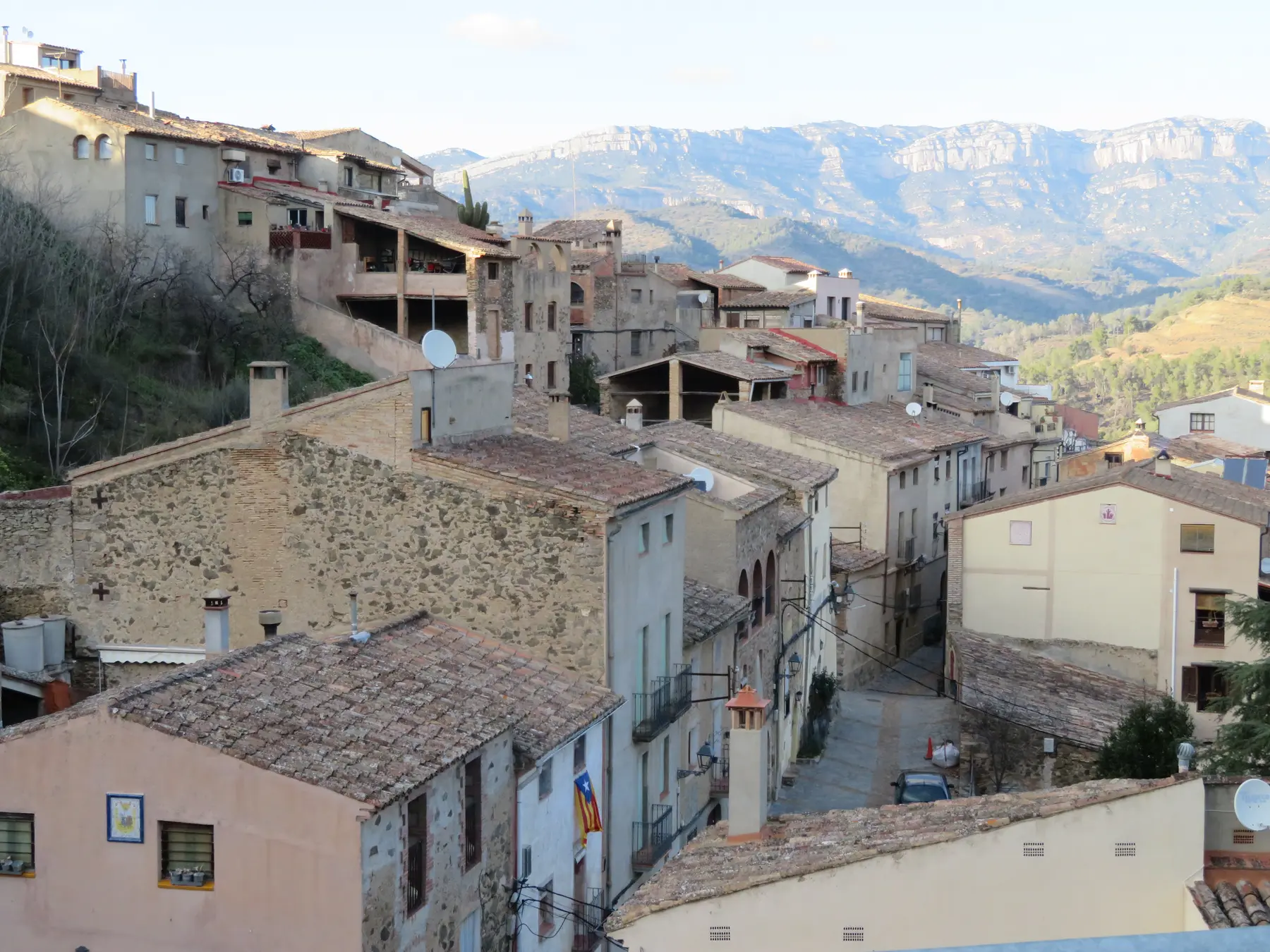
Torroja del Priorat occupies 13.16 square kilometres. The village stands at 332 metres and had 128 residents in the 2025 census.
Orientation
Above the Siurana, between four wine villages
The local view places Torroja del Priorat between Gratallops, Porrera, Poboleda and the two Vilelles. The T-711 approaches from Gratallops and the TP-7403 follows the Cortiella valley towards Porrera.
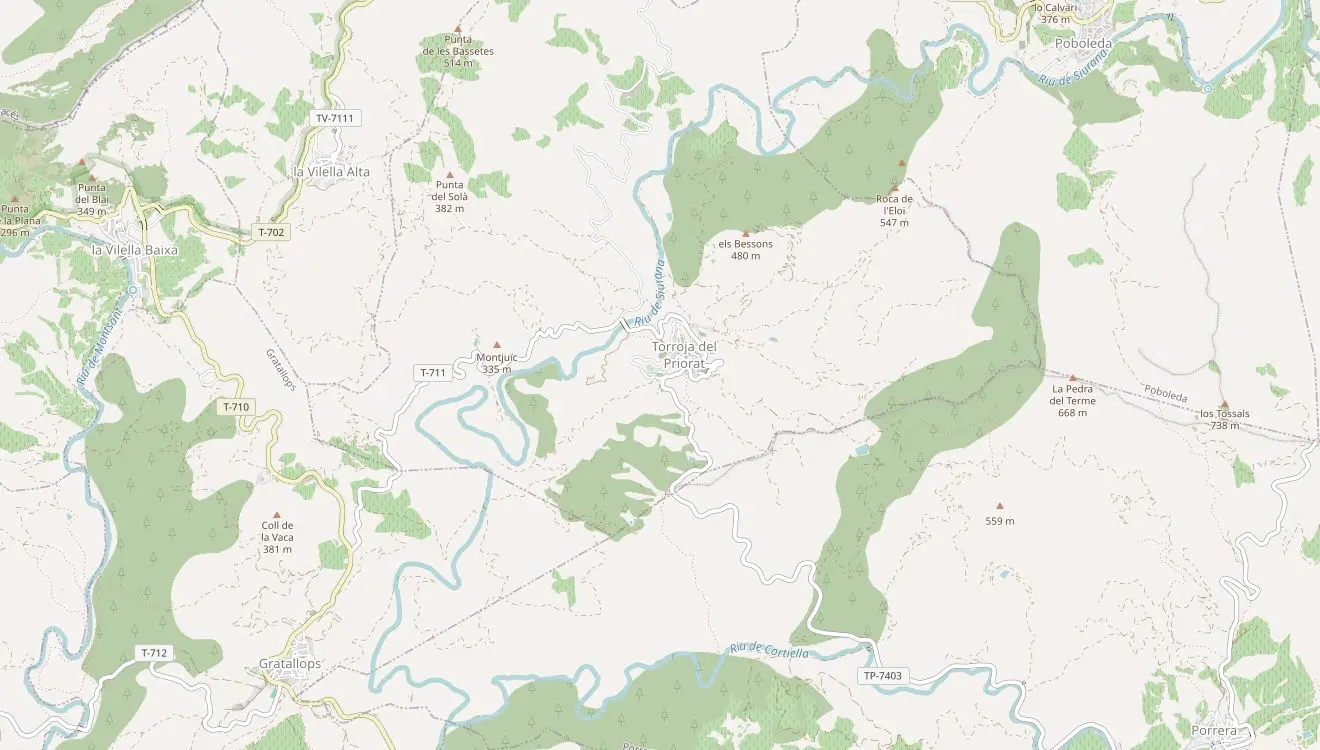 Torroja del Priorat© OpenStreetMap contributors
Wine village
Thirteen identities, with their status kept visible
The live DOQ Priorat village list supplies ten names. The wider Torroja record adds L'Infernal, El Solà d'Ares and Minyó. Minyó remains a dated directory row rather than a current producer profile.
Producer register
Twelve producer profiles
This is a municipal relationship list, not a list of tasting rooms. Visits and direct sales must be confirmed with each producer.
Sant Miquel
A French organ in a small Priorat church
The municipality dates Sant Miquel to 1766 and 1767. The Associació Catalana de l'Orgue attributes its organ to Jean-Pierre Cavaillé and dates it to 1799.
The planned instrument was ambitious: two and a half manuals with pedals. The cadireta and most of the intended pedal stops were never installed. Concerts and church access vary, so current arrangements need checking before a visit.
Carrer Major
Wine houses and the appellation council
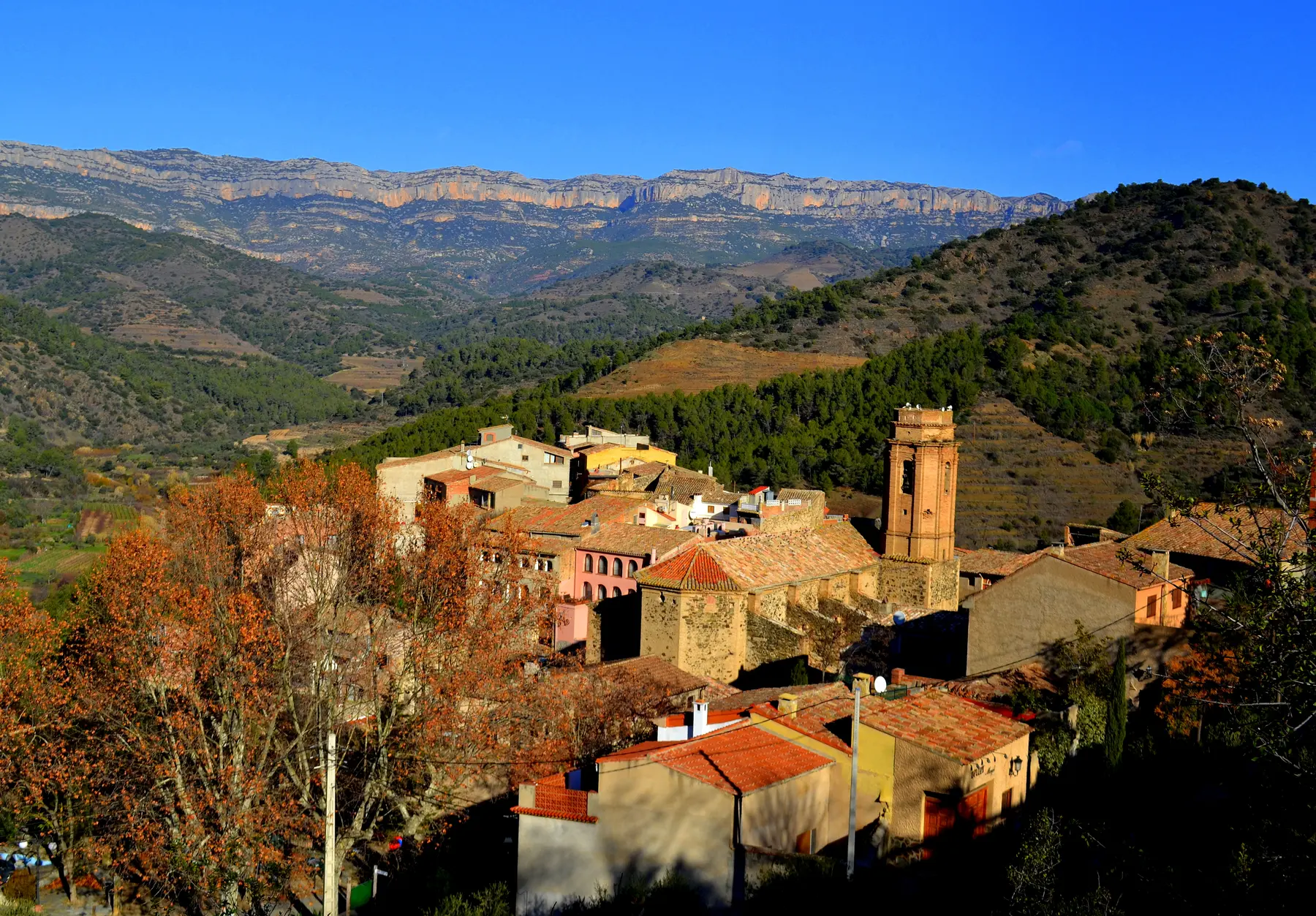
The DOQ village account connects an older form of Torroja's name with a red tower and places the medieval settlement within the influence of the Charterhouse of Escaladei.
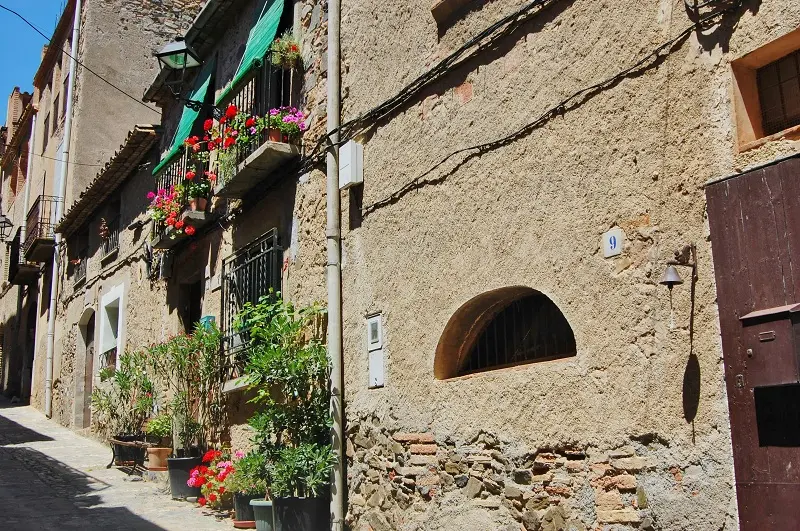
Substantial houses on Carrer Major record later wine prosperity. They were linked to rural farmhouses among the vineyards, many of which now survive as ruins. Cobbled streets retain the shape of the older centre.
The DOQ Priorat council has its headquarters at Carrer Major, 2. It gives Torroja an administrative role across the appellation, although the office should not be assumed to be a visitor attraction.
Font Vella was a meeting place for Torroja and neighbouring communities. The private Joan Pàmies museum holds farming and winemaking equipment, with access to be confirmed directly.
Planning a visit
Walk the GR 174 and plan the road journey
The GR 174 passes through Torroja between the vineyard country around Gratallops and La Vilella Alta. The village has no passenger railway station.
Regional bus services are limited and timetables can change. Check the intended day and arrange winery appointments before travelling. A car remains the practical option when several rural cellars are involved.
Continue nearby
Photography: village view, Juan Emilio Prades Bel, licensed under CC BY 4.0; Siurana valley, Àngela Llop, licensed under CC BY-SA 2.0; Carrer Major, Maria Rosa Ferré, licensed under CC BY-SA 2.0. Images cropped.
.jpg)

_-_1.jpg)